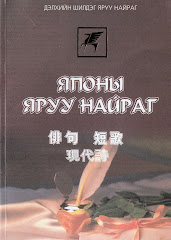
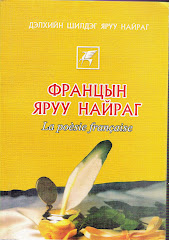
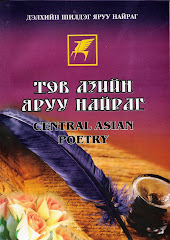
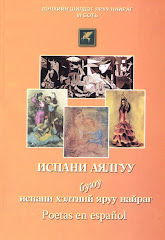
Among the many poets who left their marks in the Mongolian Middle Age culture there were four sons of the noble man Vanchingbal: Gularansa, Sunveidanzan, Guunchig and Injinashi. A family having four poets is perhaps a rare event in the history of the world poetry. Vanchingbal himself was a writer, a historian who read many Mongolian and Chinese historical annals. In 1838-1840 he wrote the first eigh chapters of the novel “The Blue Sutra” which his son Injinashi continued to its completion. Especially, Injinashi and Gularansa were very talented poets and wrote many beautiful poems.
Gularansa was born in 1820. Although, he lived only 31 years he much enriched Mongolian literature with his beautiful lyrics. In Gularansa’s works one can see that he was combining the traditions of the Mongolian poetry with the Chinese classical poetry with great skill. He looked through the life in a society with great clarity and wrote “if you want to know the taste of this world taste the gall” and “Writing my mistaken poems with a three inch bamboo is better than running after fame wearing out shoes and socks”.
Like him, his younger brothers Gunnachig, Sunveidanzan and Injinashi started very early composing poems, reading history books and translating literature. The Vanchinbals ran a family teaching in their compound in the western Tumd Hoshuun of Inner Mongolia used to do their literary work together.
The fact that four brother poets were born in the 19 th Century is not a sheer accidental happening.
Dr. G. Mend-Ooyo
Friday, October 10, 2008

Guliransa (1820-1851)
WRITING POEMS
Writing my wrongheaded poems with a three inch bamboo pen
Is better than wearing away shoes and socks in running after fame
But how sad for all of you who haven’t tasted this,
Blunting my enthusiasm with your pointless words
SOMEONE BEAUTIFUL
Your look is like a peach flower of three springs;
Your scent is like grasses of nine autumns;
The black of your hair is blacker than all inks;
Can ever the truest red match the red of your lips?
A PAIR OF SCROLLS ON A STONE MONUMENT
When they say that truth is lie, all lies are true.
When they say that non-existence exists, the existence is non-existent, too.
The script of the blue candle
Worldly affairs are like children’s game
Why do people believe in them?
If you want to know the taste of this world, then taste the gall
If you want to grasp the nature of the many, look closely at the flowers then taste
Winter beauty
Fragments of gammadion on the window of morning
Have painted the faraway mountains in the white silver of the winter’s beauty
In the empty air without edges, ice particles dance
Blurring human traces on the dusty roads of this colored world
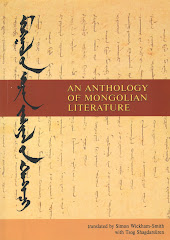
Translated and edited by Tsog Shagdarsuren and Simon Wickham Smith
Writing my wrongheaded poems with a three inch bamboo pen
Is better than wearing away shoes and socks in running after fame
But how sad for all of you who haven’t tasted this,
Blunting my enthusiasm with your pointless words
SOMEONE BEAUTIFUL
Your look is like a peach flower of three springs;
Your scent is like grasses of nine autumns;
The black of your hair is blacker than all inks;
Can ever the truest red match the red of your lips?
A PAIR OF SCROLLS ON A STONE MONUMENT
When they say that truth is lie, all lies are true.
When they say that non-existence exists, the existence is non-existent, too.
The script of the blue candle
Worldly affairs are like children’s game
Why do people believe in them?
If you want to know the taste of this world, then taste the gall
If you want to grasp the nature of the many, look closely at the flowers then taste
Winter beauty
Fragments of gammadion on the window of morning
Have painted the faraway mountains in the white silver of the winter’s beauty
In the empty air without edges, ice particles dance
Blurring human traces on the dusty roads of this colored world
Translated and edited by Tsog Shagdarsuren and Simon Wickham Smith
Монголын яруу найргийн тэнгэрт орчихуй - TURNING THROUGH THE SKIES OF MONGOLIAN POETRY
Хүн төрөлхтний танин мэдэхүй улам бүр хүрээгээ тэлсээр байна. Гэвч бидний танин мэдэхүйн гаднах хүрээнд олон зүйл оршсоор байна. Хүн төрөлхтний олон үеийн түүхэнд бичигдсэн яруу найргийн сонгодог бүтээлүүд тухайн улс үндэстэнүүдийн хүрээнээс хэдийн хальж дэлхий дахины оюуны ертөнцөд очсоор байна. Яруу найраг өнөөдөр ч бүрэн нээгдээгүй одон ертөнц хэвээр байна.
Яруу найраг бол хөгжим, уран зурагтай адилхан шууд сонсоод, эсвэл нүдээр хараад танин мэдэж нууц руу нь нэвтрэн орох боломжгүй урлаг юм. Яруу найраг хэлний үзэгдэл учраас заавал орчуулгаар дамжих ёстой. Яруу найрагчийн онгодоос дамжиж, зохиогдсон эх хэлнийхээ зохист аялгуун чанарт шилжсэн яруу найргийг өөр хэлэнд орчуулах нь бараг боломжгүй зүйл хэмээн үзэх үзэл ч байдаг. Гэвч оюун сэтгэлгээний онцгой үзэгдэл болох яруу найраг руу нь нэвтэрэхгүйгээр хүн төрөлхтөн бие биесийн соёлын үнэт зүйлсийг бүрэн дүүрэн танин мэдэх боломгүй юм. Ийнхүү өнөөдөр улс үндэстэн бүхэн орчуулгын яруу найргийн арвин сан хөмрөгийг цогцлоож, тэрхүү “бараг боломжгүй” хэмээн үзэж байсан бэрхшээлийг нэгэнт туулан хэтийджээ.
Монголчууд яруу найргийн онцгой өвөрмөц сэтгэлгээтэй ард түмэн бөгөөд яруу найргийн үлэмж баялаг өв уламжлалтай ард түмэн юм. Хоёрхон үгтэй хос уянгаас эхлээд 20000 мөртэй хөлгөн туульсийг хүртэл өргөн цар хүрээтэй яруу найргийн өв буй. Харамсалтай нь монголын яруу найраг гадаад хэлэнд маш бага орчуулагдсан. Ялангуяа англи хэлэнд орчуулагдсан нь өдрийн од шиг. Чухам яагаад гэдэг талаар маш их тайлбар ярьж болох боловч оршил үгэнд энэ мэтийг нуршихаас түдгэлзэж Монголын яруу найргийн үлэмж баян сан хөмрөгөөс дээжлэн толилуулж буй шинэ ном руугаа анхаарал хандуулъя.
Хоёр мянга таван оны намар Англиас нэгэн захидал интернэтээр хүлээн авлаа. Саймон Вэккхам Смит нэртэй залуу монголын XIX зууны сод хүмүүн, Данзанравжаагрийн яруу найргийг Англи хэлнээ орчуулж буй тухайгаа бичээд холбоо тогтоохыг хүссэн байв. Монголын яруу найраг руу өрнө зүгээс онцгойлон чиглэсэн анхных ч байж болох тэрхүү хандлага нь их үйл явдлыг эхлүүлсэн юм. Бид байнга захидлаар харилцаж байв. Тэр зарим үгийн тайлбарыг хүссэн байдаг, бид хариулсаар., Нэг мэдэхэд нэг жил өнгөрч нэгэн өдөр Данзанравжаагийн яруу найргийн бүрэн эмхэтгэл 15000 орчим мөр шүлгийн орчуулга ирвэй. Бид түүнийг 2006 оны намар Монгол Улсад болсон Дэлхийн Яруу Найрагчдын XXVI их хуралдаа урьлаа. Их хуралд монголын яруу найргаас барьсан бэлэг гэвэл Данзанравжаагийн “Үлэмжийн чанар” яруу найргийн бүрэн түүвэр, монголын эртний яруу найргийн “Эртний сайхан” эмхэтгэл байлаа. Сүүлийн номыг Монголын авъаяслаг орчуулагч Шагдарсүрэнгийн Цог, Саймон хоёр хамтарч орчуулсан юм. Дэлхийн Яруу найрагчдад бидний барьсан бэлэг энэ. Саймон, Цог бидний зүрх сэтгэл монголын яруу найргийг дэлхий дахинд англи хэлээр дамжуулан гаргах үйлсэд нэгэн хэмээр цохилж, хүний хувьд сайхан анд нөхөд, утга зохиолын ертөнцөд хамтран зүтгэгчид болсон юм. Дэлхийн зам дэнхэл донхолтой. Аян замд сайн нөхөр Ш.Цогийгоо алдаж, “Монголын шилдэг яруу найраг” хэмээх энэ цоморлигийг Саймон бид хоёр Улаанбаатар хотноо хамтран бэлтгэж уншигч олондоо өргөн баривай. Бид энэ номоороо авъаслаг орчуулагч Ш.Цогтоо ном-суварга бүтээж байна.
Номын анд, эрхэм нөхөр Саймон Вэккхам Смит бол монголын утга зохиол, түүний яруу найргийн ертөнц рүү гүнзгий сэлж орсон анхны харийн хүн байх. Тэрбээр монгол хэлийг яаж ингэж гүн гүнзгий сурсны учир начир, арга чаргыг би одоо болтол бодоод олдлггүй. Хааяа л ганц нэг үг асууна. Тэр асуултанд түгдрэх тохиолдол ч надад тохиолдож байсан. Ийм авъаслаг орчуулагч Монголын яруу найрагт зочлон ирснийг би мөнх тэнгэрийн таалал хэмээн бодном.
Энд толилуулан буй монголын шилдэг яруу найргийн цоморлигт монголын эртний улс болох Хүннүгийн дуулалаас XX зууныг дуусталх үеийн монгол яруу найргаас сорчлон дээжиллээ. Найраглал, туульс зэрэг томоохон төрөл зүйлийг энд багтаах боломж байсангүй. Бас зарим нэг яруу найргийн шилмэл бүтээлийг орчуулахад цаг хэрэгтэй байв.
Гэхдээ бидний сонголт нүүдэлчин язгууртай монголын ард түмний оюун сэтгэлгээний ертөнц рүү яруу найргаар дамжин “нүүдэллэх” таны зүрх сэтгэлийн аялалыг гайхамшигтай шинэ зүйлсээр баяжуулан цэнгүүлнэ хэмээн баттай итгэж байна.
Саймон бид хоёр Монголын яруу найргийн сонгодог шүлгүүдийг шилэн сонгоход ихэнхдээ санал нийлж байв. Гэхдээ энд сонгодог яруу найраг монголын шилмэл яруу найргийг бүрэн багтааж яахин барах билээ.
Цаана нь нэмж орчуулах олон гайхамшигтай яруу найраг үлдсэнийг хэлэх хэрэгтэй. Энэ мэт ажил нь олон жилийн уйгагүй хөдөлмөр шаардах үйлс юм. Цаашид дахин нэмж сайжруулсаар байх болнон гэдгээ баяртай өчихийн хамт ямар ч байсан олсон олзоо дэлхий дахинтай бушуухан хуваалцах сэтгэлээр энэ номоо яаран уншигч танд толилуулж байна. Танаас урмын сайн үг сонсох аваас энэ үйлсээ цааш цуцалтгүй үргэлжлүүлэхэд бэлэн байгаагаа өчсү.
Үгийн төгсгөлд хэдэн үг хэлсү. Монгол хэлэнд “ор” “орч” хэмээх язгуур буй. Уг язгуураас “орчлон” хэмээх үг үүссэн юм. “Орчлон” гэдэг нь дэлхий ертөнц, гялатикийг хамардаг. Бас “орчих” хэмээх үг ч буй. “Орчих” хэмээх үгийг монголчууд зөвхөн огторгуй тэнгэр од гараг, оюун санааны бүтээлийн тухайд л хэргэлдэг. Монголын өвгө дээдэс “орчуулах” хэмээх үгийг хэрэглэхдээ “нэг хэлнээс нөгөө хэлэнд буулгах ажил лугаа дүйцэх үйлс хэмээн үзэж байсантай холбоотой хэмээн үздэг юм. Хүн төрөлхтөний соёлын нэг тэнгэрээс нөгөө тэнгэр лүү од эрхэсийг зөөж аваачих мэт хэцүү бэрх үйлсийг амжаалсан эрхэм анд Саймон, Цог нартаа монголын яруу найргийн тэнгэрээс баярын цэцэг илгээе.
Уншигч та Монголын яруу найргийн тэнгэрт түгсэн үй түмэн ододоос өөр өөрийн сэтгэлийн тэнгэрт орчих хөдөлгөөн хийж хүлээн авсугай.
2007.6.6
Г.Мэнд-Ооёо
Human knowledge is stretching ever further. But there are many things which lie beyond our knowledge. This is because, when discussing the creative work of poets throughout human history, the world of the mind transcends nationality. Poetry is even today not open, and the world is as it was before.
Like music and fine art, the secrets of poetry cannot directly be penetrated through the aural or through the visual. Because poetry is speech made visible, in order to make it available, we need to translate it. Even to attempt the translation into another language of a poem, which has been formed in the poet’s individuality and which moves to the melodic and rhythmic qualities of its original language, is almost impossible. But poetry is a special way of looking at the world, and it is impossible for human beings fully to grasp the value of their own cultures. Today, then, we have an abundant store of poetry from all over the world, and so in the future we will achieve which we once saw as being “almost impossible”.
Mongolians are a people with a particular concept of poetry, and a rich and broad poetic heritage, stretching from couplets of two words to epics of 20,000 lines. Regrettably, Mongolian poetry has been translated very little into foreign languages. In particular, translations into English are as rare as a star in daytime. Although I could offer an explanation for this, I will refrain in my introduction from such things, and introduce this new book, in which a sample is presented from the rich heritage of Mongolian poetry.
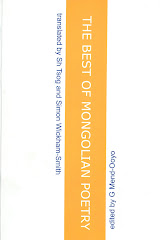
In the autumn of 2005, an email arrived on my desk from England. A young man named Simon Wickham-Smith had written that he had translated into English the poems of the nineteenth century Mongolian Renaissance man, Danzanravjaa. This first indication from the west of an interest in Mongolian poetry was the beginning of something great. I established a rapport with Simon via email, answering his requests for explanations of specific words. And so, one year ago, around 15000 lines of Danzanravjaa’s poetry was published in English translation. We invited Simon to the 26th World Congress of Poets, which was held in Mongolia during the autumn of 2006. From the annals of Mongolian poetry, we published both the collection of Danzanravjaa’s poetry, Perfect Qualities, as well as a selection of Mongolian poetry called Ancient Splendor. This latter book was a joint translation, by Simon and a Mongolian translator, Tsog Shadgarsüren, and it was presented as a s gift to the delegates at the World Congress. Tsog and Simon had published Mongolian poetry for the entire English speaking world and, in so doing, these two friends had together made inroads into the world of literature. But the road through the world is an uncertain one and, in November 2006, Tsog reached the end of his journey. Simon and I have worked together on this book, The Best of Mongolian Poetry, in Ulaanbaatar and, in offering it to our readers, would like to dedicate it as a memorial to the translator Tsog Shagdarsüren.
My good friend Simon Wickham-Smith is one of the first foreigners to have swum so deeply into the world of Mongolian literature and its poetry. Thinking now about how he managed so deeply to study the Mongolian language, I find it both rare and precious. Sometimes, he asks only about a single word. His questions even give me pause for thought. For such a gifted translator to have come to Mongolian poets, I believe, fills Heaven with joy.
For this collection of the best Mongolian poems we have sourced texts from far back as from the ancient songs of Khünnü, as well as from the poems of contemporary Mongolian poets. It has not been possible to include here examples of the highly significant epic poetry, and it will require further time to translate more of the very best work of certain poets.
That said, the traversing by poets of the nomadic mind of the Mongolian people, which constitutes the wonderful work in this new book, will entertain and profoundly enrich the journey of your own mind.
Simon and I have worked together in selecting these poems - although how could a selection be expected to include the full extent of Mongolian poetry? Nonetheless, there are some wonderful poets whose work has been translated here. Work of this caliber requires many years of tireless labor. I should also add that the original text of Ancient Splendor has herein been revised and improved and that the insight we have gained has been quickly incorporated. With this in mind, we have made our book easier for the impatient reader and we guarantee that, trusting in the readers’ good will, our work will continue.
A final word about etymology. In the Mongolian language there is a root, orch. From this word is derived the word orchlong. Orchlong denotes the world, or galaxy. And then there is the word orchikh. For Mongolians, orchikh is concerned with the turning of the mind, and of the sky and the stars and the planets. The Mongolian elders explain the word orchuulakh as being the work of turning one language into another, and of the rotation of the stars and the planets. To understand how these words relate to one another is to understand the earth. To Simon and Tsog, who managed to complete this difficult work, as though translating the heavenly bodies from one sky of human culture into another sky, let us send the rich flowers from the sky of Mongolian poetry.
I hope that you will agree that, from the many stars appearing in the sky of Mongolian poetry, we are led further into the sky of our own minds, and into the minds of others.
Яруу найраг бол хөгжим, уран зурагтай адилхан шууд сонсоод, эсвэл нүдээр хараад танин мэдэж нууц руу нь нэвтрэн орох боломжгүй урлаг юм. Яруу найраг хэлний үзэгдэл учраас заавал орчуулгаар дамжих ёстой. Яруу найрагчийн онгодоос дамжиж, зохиогдсон эх хэлнийхээ зохист аялгуун чанарт шилжсэн яруу найргийг өөр хэлэнд орчуулах нь бараг боломжгүй зүйл хэмээн үзэх үзэл ч байдаг. Гэвч оюун сэтгэлгээний онцгой үзэгдэл болох яруу найраг руу нь нэвтэрэхгүйгээр хүн төрөлхтөн бие биесийн соёлын үнэт зүйлсийг бүрэн дүүрэн танин мэдэх боломгүй юм. Ийнхүү өнөөдөр улс үндэстэн бүхэн орчуулгын яруу найргийн арвин сан хөмрөгийг цогцлоож, тэрхүү “бараг боломжгүй” хэмээн үзэж байсан бэрхшээлийг нэгэнт туулан хэтийджээ.
Монголчууд яруу найргийн онцгой өвөрмөц сэтгэлгээтэй ард түмэн бөгөөд яруу найргийн үлэмж баялаг өв уламжлалтай ард түмэн юм. Хоёрхон үгтэй хос уянгаас эхлээд 20000 мөртэй хөлгөн туульсийг хүртэл өргөн цар хүрээтэй яруу найргийн өв буй. Харамсалтай нь монголын яруу найраг гадаад хэлэнд маш бага орчуулагдсан. Ялангуяа англи хэлэнд орчуулагдсан нь өдрийн од шиг. Чухам яагаад гэдэг талаар маш их тайлбар ярьж болох боловч оршил үгэнд энэ мэтийг нуршихаас түдгэлзэж Монголын яруу найргийн үлэмж баян сан хөмрөгөөс дээжлэн толилуулж буй шинэ ном руугаа анхаарал хандуулъя.
Хоёр мянга таван оны намар Англиас нэгэн захидал интернэтээр хүлээн авлаа. Саймон Вэккхам Смит нэртэй залуу монголын XIX зууны сод хүмүүн, Данзанравжаагрийн яруу найргийг Англи хэлнээ орчуулж буй тухайгаа бичээд холбоо тогтоохыг хүссэн байв. Монголын яруу найраг руу өрнө зүгээс онцгойлон чиглэсэн анхных ч байж болох тэрхүү хандлага нь их үйл явдлыг эхлүүлсэн юм. Бид байнга захидлаар харилцаж байв. Тэр зарим үгийн тайлбарыг хүссэн байдаг, бид хариулсаар., Нэг мэдэхэд нэг жил өнгөрч нэгэн өдөр Данзанравжаагийн яруу найргийн бүрэн эмхэтгэл 15000 орчим мөр шүлгийн орчуулга ирвэй. Бид түүнийг 2006 оны намар Монгол Улсад болсон Дэлхийн Яруу Найрагчдын XXVI их хуралдаа урьлаа. Их хуралд монголын яруу найргаас барьсан бэлэг гэвэл Данзанравжаагийн “Үлэмжийн чанар” яруу найргийн бүрэн түүвэр, монголын эртний яруу найргийн “Эртний сайхан” эмхэтгэл байлаа. Сүүлийн номыг Монголын авъаяслаг орчуулагч Шагдарсүрэнгийн Цог, Саймон хоёр хамтарч орчуулсан юм. Дэлхийн Яруу найрагчдад бидний барьсан бэлэг энэ. Саймон, Цог бидний зүрх сэтгэл монголын яруу найргийг дэлхий дахинд англи хэлээр дамжуулан гаргах үйлсэд нэгэн хэмээр цохилж, хүний хувьд сайхан анд нөхөд, утга зохиолын ертөнцөд хамтран зүтгэгчид болсон юм. Дэлхийн зам дэнхэл донхолтой. Аян замд сайн нөхөр Ш.Цогийгоо алдаж, “Монголын шилдэг яруу найраг” хэмээх энэ цоморлигийг Саймон бид хоёр Улаанбаатар хотноо хамтран бэлтгэж уншигч олондоо өргөн баривай. Бид энэ номоороо авъаслаг орчуулагч Ш.Цогтоо ном-суварга бүтээж байна.
Номын анд, эрхэм нөхөр Саймон Вэккхам Смит бол монголын утга зохиол, түүний яруу найргийн ертөнц рүү гүнзгий сэлж орсон анхны харийн хүн байх. Тэрбээр монгол хэлийг яаж ингэж гүн гүнзгий сурсны учир начир, арга чаргыг би одоо болтол бодоод олдлггүй. Хааяа л ганц нэг үг асууна. Тэр асуултанд түгдрэх тохиолдол ч надад тохиолдож байсан. Ийм авъаслаг орчуулагч Монголын яруу найрагт зочлон ирснийг би мөнх тэнгэрийн таалал хэмээн бодном.
Энд толилуулан буй монголын шилдэг яруу найргийн цоморлигт монголын эртний улс болох Хүннүгийн дуулалаас XX зууныг дуусталх үеийн монгол яруу найргаас сорчлон дээжиллээ. Найраглал, туульс зэрэг томоохон төрөл зүйлийг энд багтаах боломж байсангүй. Бас зарим нэг яруу найргийн шилмэл бүтээлийг орчуулахад цаг хэрэгтэй байв.
Гэхдээ бидний сонголт нүүдэлчин язгууртай монголын ард түмний оюун сэтгэлгээний ертөнц рүү яруу найргаар дамжин “нүүдэллэх” таны зүрх сэтгэлийн аялалыг гайхамшигтай шинэ зүйлсээр баяжуулан цэнгүүлнэ хэмээн баттай итгэж байна.
Саймон бид хоёр Монголын яруу найргийн сонгодог шүлгүүдийг шилэн сонгоход ихэнхдээ санал нийлж байв. Гэхдээ энд сонгодог яруу найраг монголын шилмэл яруу найргийг бүрэн багтааж яахин барах билээ.
Цаана нь нэмж орчуулах олон гайхамшигтай яруу найраг үлдсэнийг хэлэх хэрэгтэй. Энэ мэт ажил нь олон жилийн уйгагүй хөдөлмөр шаардах үйлс юм. Цаашид дахин нэмж сайжруулсаар байх болнон гэдгээ баяртай өчихийн хамт ямар ч байсан олсон олзоо дэлхий дахинтай бушуухан хуваалцах сэтгэлээр энэ номоо яаран уншигч танд толилуулж байна. Танаас урмын сайн үг сонсох аваас энэ үйлсээ цааш цуцалтгүй үргэлжлүүлэхэд бэлэн байгаагаа өчсү.
Үгийн төгсгөлд хэдэн үг хэлсү. Монгол хэлэнд “ор” “орч” хэмээх язгуур буй. Уг язгуураас “орчлон” хэмээх үг үүссэн юм. “Орчлон” гэдэг нь дэлхий ертөнц, гялатикийг хамардаг. Бас “орчих” хэмээх үг ч буй. “Орчих” хэмээх үгийг монголчууд зөвхөн огторгуй тэнгэр од гараг, оюун санааны бүтээлийн тухайд л хэргэлдэг. Монголын өвгө дээдэс “орчуулах” хэмээх үгийг хэрэглэхдээ “нэг хэлнээс нөгөө хэлэнд буулгах ажил лугаа дүйцэх үйлс хэмээн үзэж байсантай холбоотой хэмээн үздэг юм. Хүн төрөлхтөний соёлын нэг тэнгэрээс нөгөө тэнгэр лүү од эрхэсийг зөөж аваачих мэт хэцүү бэрх үйлсийг амжаалсан эрхэм анд Саймон, Цог нартаа монголын яруу найргийн тэнгэрээс баярын цэцэг илгээе.
Уншигч та Монголын яруу найргийн тэнгэрт түгсэн үй түмэн ододоос өөр өөрийн сэтгэлийн тэнгэрт орчих хөдөлгөөн хийж хүлээн авсугай.
2007.6.6
Г.Мэнд-Ооёо
Human knowledge is stretching ever further. But there are many things which lie beyond our knowledge. This is because, when discussing the creative work of poets throughout human history, the world of the mind transcends nationality. Poetry is even today not open, and the world is as it was before.
Like music and fine art, the secrets of poetry cannot directly be penetrated through the aural or through the visual. Because poetry is speech made visible, in order to make it available, we need to translate it. Even to attempt the translation into another language of a poem, which has been formed in the poet’s individuality and which moves to the melodic and rhythmic qualities of its original language, is almost impossible. But poetry is a special way of looking at the world, and it is impossible for human beings fully to grasp the value of their own cultures. Today, then, we have an abundant store of poetry from all over the world, and so in the future we will achieve which we once saw as being “almost impossible”.
Mongolians are a people with a particular concept of poetry, and a rich and broad poetic heritage, stretching from couplets of two words to epics of 20,000 lines. Regrettably, Mongolian poetry has been translated very little into foreign languages. In particular, translations into English are as rare as a star in daytime. Although I could offer an explanation for this, I will refrain in my introduction from such things, and introduce this new book, in which a sample is presented from the rich heritage of Mongolian poetry.
In the autumn of 2005, an email arrived on my desk from England. A young man named Simon Wickham-Smith had written that he had translated into English the poems of the nineteenth century Mongolian Renaissance man, Danzanravjaa. This first indication from the west of an interest in Mongolian poetry was the beginning of something great. I established a rapport with Simon via email, answering his requests for explanations of specific words. And so, one year ago, around 15000 lines of Danzanravjaa’s poetry was published in English translation. We invited Simon to the 26th World Congress of Poets, which was held in Mongolia during the autumn of 2006. From the annals of Mongolian poetry, we published both the collection of Danzanravjaa’s poetry, Perfect Qualities, as well as a selection of Mongolian poetry called Ancient Splendor. This latter book was a joint translation, by Simon and a Mongolian translator, Tsog Shadgarsüren, and it was presented as a s gift to the delegates at the World Congress. Tsog and Simon had published Mongolian poetry for the entire English speaking world and, in so doing, these two friends had together made inroads into the world of literature. But the road through the world is an uncertain one and, in November 2006, Tsog reached the end of his journey. Simon and I have worked together on this book, The Best of Mongolian Poetry, in Ulaanbaatar and, in offering it to our readers, would like to dedicate it as a memorial to the translator Tsog Shagdarsüren.
My good friend Simon Wickham-Smith is one of the first foreigners to have swum so deeply into the world of Mongolian literature and its poetry. Thinking now about how he managed so deeply to study the Mongolian language, I find it both rare and precious. Sometimes, he asks only about a single word. His questions even give me pause for thought. For such a gifted translator to have come to Mongolian poets, I believe, fills Heaven with joy.
For this collection of the best Mongolian poems we have sourced texts from far back as from the ancient songs of Khünnü, as well as from the poems of contemporary Mongolian poets. It has not been possible to include here examples of the highly significant epic poetry, and it will require further time to translate more of the very best work of certain poets.
That said, the traversing by poets of the nomadic mind of the Mongolian people, which constitutes the wonderful work in this new book, will entertain and profoundly enrich the journey of your own mind.
Simon and I have worked together in selecting these poems - although how could a selection be expected to include the full extent of Mongolian poetry? Nonetheless, there are some wonderful poets whose work has been translated here. Work of this caliber requires many years of tireless labor. I should also add that the original text of Ancient Splendor has herein been revised and improved and that the insight we have gained has been quickly incorporated. With this in mind, we have made our book easier for the impatient reader and we guarantee that, trusting in the readers’ good will, our work will continue.
A final word about etymology. In the Mongolian language there is a root, orch. From this word is derived the word orchlong. Orchlong denotes the world, or galaxy. And then there is the word orchikh. For Mongolians, orchikh is concerned with the turning of the mind, and of the sky and the stars and the planets. The Mongolian elders explain the word orchuulakh as being the work of turning one language into another, and of the rotation of the stars and the planets. To understand how these words relate to one another is to understand the earth. To Simon and Tsog, who managed to complete this difficult work, as though translating the heavenly bodies from one sky of human culture into another sky, let us send the rich flowers from the sky of Mongolian poetry.
I hope that you will agree that, from the many stars appearing in the sky of Mongolian poetry, we are led further into the sky of our own minds, and into the minds of others.
G Mend-Ooyo
Ulaanbaatar
June 6th 2007
Ulaanbaatar
June 6th 2007
Thursday, October 9, 2008
B. Rinchin (1905-1977)
The Moon
The mottled yellow moon, the old crone,
Slipped on her deel of perforated clouds and,
Leaning on her walking-stick of white rays,
Drove out her flock of her calves, the stars.
Her little cousin, meanwhile, the wind, whistled his way
Through her ragged deel of clouds.
In the Wilds in Autumn
Tiring the eyes, the wild steppe ripples,
Yellowish and soundless.
Grasshoppers, the world’s voice, keep silent.
In the sky above only the storks are calling.
From the withered, yellow sphere of the sky
Comes a lovely and intriguing scent.
From the foreheads of the stone men in the cemeteries,
The hoarfrost melts into pearls of sweat.
Translated and edited by Tsog Shagdarsuren and Simon Wickham- Smith
The mottled yellow moon, the old crone,
Slipped on her deel of perforated clouds and,
Leaning on her walking-stick of white rays,
Drove out her flock of her calves, the stars.
Her little cousin, meanwhile, the wind, whistled his way
Through her ragged deel of clouds.
In the Wilds in Autumn
Tiring the eyes, the wild steppe ripples,
Yellowish and soundless.
Grasshoppers, the world’s voice, keep silent.
In the sky above only the storks are calling.
From the withered, yellow sphere of the sky
Comes a lovely and intriguing scent.
From the foreheads of the stone men in the cemeteries,
The hoarfrost melts into pearls of sweat.
Translated and edited by Tsog Shagdarsuren and Simon Wickham- Smith
D. Natsagdorj (1906-1937)
THE FOUR SEASONS
Spring
A thousand thousand springs beneath the eternal sky
In lovely Mongolia, a breadth of years and years.
In this gentle season, the people’s minds are calm,
And livestock serene in the verdancy of grass.
Patterns of snow thaw as the distant sun draws near.
The old is made new in the world.
Trees blossom, children play outside, and
Old men think themselves young.
The braying, honking geese fly back to the steppe.
The herders, sitting at home, are moved by their call.
Rivulets stream down the mountainsides,
And goats and kids bleat out their joyful song.
You can feel a peaceful blessing,
Awakening the hidden mind, conjuring the past and present.
Wonderful new life ornaments the folds,
And parents delight in their cradled child.
Summer
When gorgeous summer starts,
On the gorgeous Khangai ranges,
The cuckoos sing out sweetly –
Oh, how lovely this world is!
A green haze hangs in space, a delusion of mirages,
And a horse neighs, longing for its home.
A rain of flowers purifies the face of the world,
And young people cram their minds with one another.
In summer, the mountains teem with fresh waters.
Mongolia takes pleasure in her three manly sports, and
Children sing their horserace song throughout the valleys.
These swift and gleaming horses are admired by all.
Festive melodies echo across the vast steppe.
Livestock graze the countryside, and
The scent of airag fills everyone’s nostrils.
Everywhere is so lovely, such happiness everywhere!
Autumn
The yellow sun of autumn shines on you and me,
And we are moved by the changing seasons.
Stags and moose bellow and pleasure the mountain streams,
And lowing cows drive on the herdsmen.
Thin clouds scud across the lovely skies, and
Young people go abroad to study.
The voiceless limpid river flows,
The moon’s reflection whispers tales of love.
In the morning hoarfrost, glistening like pearls,
A horse, tethered outside, shifts and shivers.
While he’s out early hunting fox and wolf,
His wife and kids wait at home, distilling arkhi.
The gentle winds of autumn move the trees and grasses.
The hearts of old and young are filled with tears.
Leaves drift down from the yellowing trees,
And sometimes we have sadness in our hearts.
Winter
Icy breath snaps the air.
Mountains and valleys in the golden world are mantled in silver,
And the stars in the wintry skies glimmer like sparks.
The caravanners’ song echoes across the broad steppe.
The high peaks are held by mist and fog.
Our eyes grow wide in the hollows of the vast steppe.
The cattle in the fresh pastures glow with health,
Corralled by whistling herdsman.
The cold freezes you to the marrow on the high ground.
There’s a fire in the faces of young Mongolians.
The Pleiades hang over the mountains, the candlelight grows dim,
And the old folk stoke the fire and spin their words.
Winter, spring, summer and autumn are the turning seasons.
Mountains, water, sun and moon are firm friends.
A farewell to the old, a welcome to the newborn –
Unceasing for a thousand thousand years.
Translated by Simon Wickham Smith
Dulduit Danzanravjaa (1803-1856)
YOUR PERFECT QUALITIES
Your perfect qualities,
Are like colors reflected in a mirror.
I see your shining face, my dear,
And truly you have captured
My entire mind and body.
Like the cuckoo’s song,
You relieve the stress in my mind.
Your kind words are gentle, my dear,
With such kindness you sit
And offer comfort.
Your elegant body ,
Borne upon the breeze,
Is beyond words, my dear.
Like the scent of red sandalwood,
You more and more entrance my thoughts.
Like the taste of honey
Flowing from the heart of the lotus,
Joy in you, my dear,
Makes me ever happier,
Happier beyond belief.
In this human age,
To do what you wish
Is to wish for the things of heaven.
Afloat upon the ocean of deep enjoyment,
Let us be joyful together.
SHAME, SHAME
And oh, the old get older without collecting merit - what a shame!
And oh, the young get dressed up without straightening their minds - what a shame!
And oh, the wise don’t put their Dharma minds together - what a shame!
And oh, the princes are showy when they serve - what a shame!
And oh, the girls support their men, but not their father - what a shame!
And oh, the ministers quarrel together over the state - what a shame!
And oh, the pandits learn various things, but not the Dharma - what a shame!
And oh, the yogis scream phat! when they’re meditating - what a shame!
And oh, the sangha study in the monastery by day and wander round the camp at night
- what a shame!
And oh, the students pray openly and stuff themselves in secret - what a shame!
And oh, the doctors consider cost and not a helpful attitude - what a shame!
And oh, the cautious expose the faults of others, and don’t look at their own faults -
what a shame!
And oh, the girls’ eyes watch his face, but their minds are on the way his ass moves -
what a shame!
And oh, the scholars teach others by day and slack off at night - what a shame!
And oh, the men come visiting, lambasting their wives - what a shame!
And oh, their wives make friends with others, without addressing what their husbands
say - what a shame!
And oh, if I have these faults myself, then I am first amongst equals - what a shame!
And oh, which of the others, old or young, does not? What a shame! What a shame!
Please don’t stop. Oh, you poor things!
GENTLY
With gentle, gentle steps
My creamwhite horse with black eyes
Stays well away from
The mass of geldings.
That one, my bright one,
Just standing amidst the crowd,
Just standing there, alert,
Its temperament so lovely.
The nightingale on the glacial lake
Sings in vain its strange songs.
Why did the child of the man
Love in vain and too much?
What is this thing called love?
It’s a lovely, ancient benediction.
Let us take the short cut by the southern slope
And reach the distant land.
It’s a pleasure to go meet
The one you desire -
You’ll need the riches of Dharma.
Let's enter Abhidharma and enjoy eternity.
OF VARIOUS THINGS
Namo guru Padmasambhavaya!
Despite my laziness,
This is what I’ve written today
In my drunkenness -
My song, made up of various things.
For sure, if you think to understand your mind,
They say Mahakala’s kindness is not far, it’s really quite close.
Once the struggle’s over,
A light arises, shining from within.
Oh, my poor one!
You find this human body, in a single lifetime -
You use it pointlessly.
Thinking of Mahakala, whose blessing is profound,
You walk through the world of creatures on an even keel.
Zee ayakhai!
You have no need of pleasure, my holy lama Mahakala.
And, if we place a true prayer at the center of our heart,
Please grant pleasure, with equanimity,
To the creatures of the Gobi - and specially to me.
All these things I offer in sacrifice.
Zee zui zee kho zee.
May you look with love upon the kindness of all beings.
When in my life may I trust you from the center of my heart?
The protection of all beings is in your power,
May it seep out through the narrow defiles of the world.
Zee zui zee khoo zee.
I think of my kind mother, even though I’m old;
Compassionate like my father, I make firm friends.
Tired of the dangers of the hidden world,
When in my life shall I think of my protecting lama?
Zee zui zee khoo zee.
The isolated mind is hard like a demon.
Our life in the world is like a night-time dream.
When I speak with care about the Triple Jewel,
May my mind grasp the oath with purity.
Zee zui zee khoo zee.
What is this disreputable drunk
Saying to you as he makes his escape?
I speak with pure commitment,
Please listen closely to these various things.
Zee zui zee khoo zee.
I go back to my ger and my cattle,
But I’m in two minds.
The way through the slanderous world doesn’t matter, does it?
We’ll meet in the mandala, where everyone is camped.
Zee zui zee khoo zee.
You won’t find anyone who’ll not end up dead.
In this life, as we move away from what’s disruptive,
May we find the path of the liberated Aryas.
My glorious lama, please give your advice.
Zee zui zee khoo zee.
Oh, oh, this is all a game.
The gifts are good and good fortune is tranquil.
Complete happiness, a wonderful experience!
DUALITY
Wisdom and ignorance is duality, and
Hitting the mark and getting it wrong is duality.
Disturbed and attentive is duality, and
Goodness and badness is duality.
Virtue and sin is duality, and
Help and hindrance is duality.
White and black is duality, and
Receiving and rejecting is duality.
Samsara and Nirvana is duality, and
Bad and good is duality.
The state and the clergy is duality, and
This life and the next is duality.
Heaven and earth is duality, and
Tall and short is duality.
Self and other is duality, and
Inside and outside is duality.
Winter and summer is duality, and
Cold and heat is duality.
Sun and moon is duality, and
Fire and water is duality.
Birth and death is duality, and
Combining and breaking is duality.
It is and it is not is duality, and
Easy and difficult is duality.
Father and mother is duality, and
Wisdom and skilful means is duality.
Buddhas and demons is duality, and
Superior and inferior is duality.
Happiness and suffering is duality, and
Desires and frustrations is duality.
Body and mind is duality, and
Healthy and sickly is duality.
Before and after is duality, and
What has come and what is coming is duality.
Firm and fragile is duality, and
Slow and fast is duality.
Circular and triangular is duality, and
Defective and faultless is duality.
To come together and to depart is duality, and
To be seen and to disappear is duality.
Happiness and fear is duality, and
Explicit and hidden is duality.
Faith and doubt is duality, and
Trust and support is duality.
Wisdom and error is duality, and
What is and what is not is duality.
Alchemy and dream is duality, and
Created and uncreated is duality.
Word and fact is duality, and
Sign and thought is duality.
Drunk on the one taste of pairness
In the sky of nonduality,
My friends, may we accomplish
Our prayer of disappearance.
Gobi Noyon Khutugtu Danzanravjaa was a religious philosopher, educator, talented painter, composer, drama writer and poet. He wrote more than 1500 works both in Tibetan and Mongolian.
Translated by Simon Wickham Smith
G. Zanabazar (1635-1723)
A PRAYER FOR PEACE
G. Zanabazar (1635-1723)
G. Zanabazar (1635-1723)
To the root and lineage lamas who bestow the highest blessings,
To the yidam and the peaceful and wrathful gods, who fall in a rain of siddhi,
And to the dakini and Dharma protectors who eliminate all obstacles,
I prostrate with great respect of body, speech and mind.
I make an offering of concrete things and those created in the mind,
Spreading out through space, as far as it endures.
I admit my faults and errors, built up throughout eternity, and
I rejoice at goodness done by Holy Ones.
I pray you turn the wheel of profound Dharma,
To remain firm until samsara ends.
I pray that, in this ocean of suffering, all the virtue be increased,
Of the Buddhas and their descendents in the three times.
To purify our darkness and our ignorance, and
To spread the light of wise omniscience,
Protect us in these sinful times with your compassion,
We who have met with great wickedness and ignorance.
By pacifying the great fire of suffering,
In which the seeds of evil ripen,
May our minds be loving and, without anger for each other,
May our happiness spread.
Save us, save us, undeceiving Lord!
Watch us, watch us, you boundless source of love!
Do not forget, do not forget, you ancient Dharmapalas!
Think of us, think of us, and quickly save us.
May the sunlight of the Buddha’s teachings spread throughout the ten directions,
May the glorious happiness of all last eternally, and
May we quickly reach that omniscient state,
Where all defilements are purified.
Through the blessing of the lama and the triple jewel and
The undeceiving power of the changeless Dharmadhatu,
Through the activity of the Dharmapalas
May we attain the endless height of Sumeru.
Through the blessing of the lama protectors,
May all present and transcendent troubles be pacified.
May we enjoy the self-arising, universal glory
Of samsara and nirvana.
Sarva mangalam
The First Bogdo Zanabazar, son of Tusheet Khan Gombojavof the Chinggis lineag, was the head of Mongolian Buddism, a uiniquely talented sculptor, educator. His Janlav Tsogzol is a unique and magic poem.
Translated by Simon Wickham-Smith
Subscribe to:
Posts (Atom)